Feb 28, 2015

Positivity Wall

My kids were incredibly well-behaved on a field trip last week, so the next day, this happened.

I used dry erase markers on our tiled wall in the hall to write positive traits about my students, and they loved reading them every time we walked by!  Honestly, I think it brightened the day of all of us!

Feb 24, 2015

Teacher Pay Teacher Sale!

300 × 300

All of my products on Teacher Pay Teacher will be on sale starting tomorrow!  Here are just a few items you could check out.

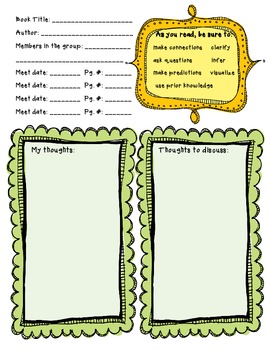
Reading Punctuation chart                Book Club Student Forms   


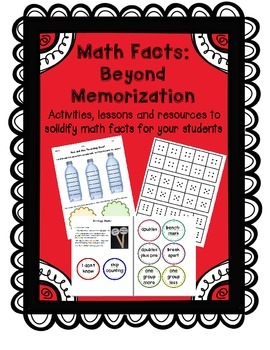
Math Fact Bundle

Feb 21, 2015

Engage(NY) in Fractions

February was the month we started our fractions unit and I am so excited!  I know, weird considering several of the fraction standards are written in Greek.  Well, technically math language, but isn't it the same thing?
This time around I've been using EngageNY's modules to supplement my own activities and it's brought up some really deep math discussions.  I love the selection of fraction amounts they use in the problems that surface common misconceptions, and I love the fact it uses effective models like tape diagrams and number lines.  And the best part is that it's done.  Curriculum that actually fits with the way I'd teach, that has everything ready to go.  What every teacher needs.

Here's a video I made recently explaining in 3 min. or less the concept of adding fractions that have a sum greater than one.

Sep 29, 2014

"One More" Math Fact Strategy

This year I started things off with a unit on math facts and I loved it!  Our strategies include: one (group) more, one (group) less, benchmark numbers, doubles, doubles plus one, and break apart (like breaking a 7 into a 5 and 2 to multiply).  A lot of the strategies fit with other concepts like multi-digit addition, subtraction, multiplication and even division.  We worked on strategies for solving math facts in place of memorization.  Only one third of kids can memorize easily, yet teachers often keep pounding on the same learning style hoping something will change with the child.  So below is one of the things I did differently this year. (Check out my Math Fact unit on tPt). Here's a part of a lesson showing the strategy of "one group more" or "one group less" using graph paper and arrays.

The Process:
(mathematical thinking questions included in the photos)

This activity also uses graph paper, but it shows the "doubling and halving" strategy for solving math facts.  For example, if the student knows the math fact 3x8 they can double it to find the product of 6x8, a much harder math fact to solve.

On graph paper, have your child draw and shade a 2x2 array (color two squares across and two squares down).  Ask them what shape was made (a square) and what the area is inside (4 squares); this is a tie-in to area and measurement.  
On top of the 2x2 array, have your child draw and shade a 4x4 array.  Part of the larger array should overlap the smaller array.  If you want to, you can ask the questions shown in the picture.


 On top of the 4x4 array, have your child draw and shade an 8x8 array.  Part of the larger array should overlap both the medium-sized and small arrays.  If you want to, ask the questions show in the picture.
Notice how well the student is able to communicate their mathematical thinking and how clearly they can relate their ideas.  Do they understand that doubling both numbers in the equation doubles both the length and the width of the shape, which actually quadruples the product?  Can they figure out a math fact equation that would be double 4x7?  Are they able to apply this strategy to other math facts?

Sep 20, 2014

The Endless Math Facts Battle

You know how in teaching you have to pick your battles?  Well this past summer, math facts became one of the battles I picked.  Aaannd, this is why...  Ever had this conversation?
"I practiced math facts with my kids all. year. long.  We worked hard and they knew them by the end of the year.  I don't know why they don't know it for you."
Year after year I felt like I keep drilling the math facts.  Playing the games.  Using technology to practice.  Getting parent volunteers to do flashcards.  Sending home math facts activities.  And still it seemed like a relentless pursuit of learning that doesn't even last.
But then I came across this article from "Teaching Children Mathematics", published by NCTM in the April 2014 issue.

Oh. my. gosh.  I love it!  It made me see the ridiculousness in what I was doing.  In no other area of teaching do I give the kids a timed test, then pull out flashcards and rote memorization tools, and then give them another timed test on the same concept a week or two later.  No wonder that wasn't working.  Because we know that what works in teaching is developing the concept, building strategies and understanding, reteaching and explaining in different ways.  Most of the time, I teach other math concepts in a concrete-pictorial-abstract model, giving support along the way.  I decided to do the same with math facts and after doing some math education research, I created this Math Fact: Beyond Memorization unit.  Of course, this is only a small sample, but you can get all 90 pages of it at my tPt store.


Sep 6, 2014

No More Nametags!

The day I got rid of nametags on the desk was the day I regained a piece of my sanity!  No more peeling tape.  No more distracted kids playing with the corners.  And no more scrubbing of that hard-to-get-off sticky residue that can send any teacher to a nice padded room with a leather reclining couch.  So the solution is...wet erase markers!  On the first day, my students are able to choose their own desk. (see post here)  When they do, they write their name decoratively with wet erase marker at the top of their desk.  This gives me time to organize classroom supplies, collect school forms, talk to students and do all the other things that pop up within the first 10 min. of the first day of school.
This form of nametagging makes it easy to change, the kids love it and I don't have any more battles with tape residue (wait, did I mention that already?).  No more paper nametags-and I'll never go back.

Aug 29, 2014

Fabulous Finds Friday: EngageNY

Have you heard of this amazing website full of resources and lessons and other fabulous goodies? If you haven't, you have to check it out. Like, now. Go ahead, click the link. I'll wait here.

Now if you're anything like me, you probably just spent 3 hours, easily, hopping from resource to resource and downloading things like crazy.  In case you didn't find them yourself, here are some of my favorites:

Math Strategies video library-thinking of sending some of these strategy videos to parents of struggling kids
Background on Common Core (since there are a lot of misconceptions floating around out there)
Data Driven Instruction resources - I loved Paul Bambrick-Santoyo's book by the same name
Common Core Curriculum Modules - just discovered these this summer and they've become my go-to already!


Don't get too lost out there in cyber NY!

Aug 13, 2014

Before You Enter - First Day Agreements


Ah, the joy of the first day of school.  The smell of new shoe rubber.  Parents transformed into paparazzi.  And the scent of freshly laundered children in brand new clothes.  The feeling of a brand new start is in the air.  And I like to capitalize on that from the second students line up at my door.  Before that first bell ever rings, I close my classroom door and put a tape half-circle on floor outside the door.  When I bring the kids in on that first day, I welcome them warmly, ask them to put their backpacks down along the way and gather around me on the tape half-circle in front of the door, right in the hall.  Kids are surprised.  Slightly confused.  I suddenly have their full attention.

And while those eager little faces are looking up at me, I kindly explain to them how important my classroom is to me.  It's where I spend half of my time, I tell them.  It's my second home, I say.  It's where I can go and feel safe, both emotionally and physically cared for, and I want them to feel the same (cue the Kleenex, as I always seem to tear up here).  I explain how important it is to me that my classroom stay upbeat and positive, that it be a place where all of us can safely take risks, try things we're not good at and make all kinds of mistakes.  In our classroom that can only be done with full positivity.  We have to support each other, encourage each other and help each other.  Because when it comes down to it, throughout the school, we're all we've got, we're a team and teams have to stick together (okay, slightly overdramatized, but the tears always well up at this point too).  And then I lean forward in my chair and ask them The Big Question: Can you agree to that?  Can agree to be kind?  Can you agree to be positive and not say negative things?  Will you agree to help others feel cared for, both their emotions and their body?  Can you agree to make our classroom the best place ever?  If you agree to this, will you show your commitment by shaking my hand, introducing yourself to me and then entering our special classroom.  At this point, and only at this point, I open my classroom door to them.  And these cute little kids transform from spazzy, excited, bouncing children to eager, respectful, grounded children ready to start the year off right.  

In 8 years of doing this, I've only had one student ever choose not to agree.  So...what to do?  Well, students had already been given the direction to hang up their backpack in the back, choose a desk and draw their name on it (see post here) and then sit on our colored rug.  Choosing and labeling a desk, alone, usually takes them a good 15 min., which gave me time to pop back out in the hall and talk to this student.  I asked him why he felt uncomfortable with our agreements and he shared with me concerns about his behavior in past years.  He said he always seemed to get in trouble for talking out and didn't know how to control it, so he knew he couldn't agree to be his best.  *My heart broke.*  But I'm so glad I knew this within the first 10 min. of the first day of school.  We quickly agreed to create a behavior plan together and I assured him that I would do all I could to help and support him, as long as he continued to try again each new day.  This he could agree to.  I asked if he could be kind to the other kids and help them when he saw a need.  This he could also agree to.  So after a short 3-min chat we both felt great about him being in our class and getting a fresh start.

This is all outside the box, I know.  People look at us curiously as they walk down the hall that morning, and other teachers ask me what I'm doing for so long after the bell, sitting in the hall with my kids.  And I'm excited to tell them all about the team-like feeling we have from the first moments, and how caring all my kids were to each other from the very first day.  I love it. This is the best way to start our year together, all on the same page.


*The key to this is my own genuine, heart-felt expression of what I picture our classroom environment to be.  The children can sense the sincerity in my tone and are able to buy in because they know I believe this myself.  No lecture, no stern face - just speaking wholeheartedly person to person, with respect.  


Aug 7, 2014

And we're back...

I can't believe it's the end of the summer already.  I mean, really?  How does February always feel like two months and summer feel like 2 weeks?  I believe that's what Einstein was really referring to when he said time was relative.
This was the first year I wasn't in the classroom throughout the summer.  Yes, I can hear the applause from all the people in my life.  It helped that I started off the summer doing week-long math trainings for Utah's Core Academy.  I was out of town (and thereby away from the school) for them and, funny enough, distance did not make my heart grow fonder.  Instead, I spent the time - school-wise - doing a lot of research, taking university classes and writing higher-quality lessons and tests.  It was invigorating!  I'm so excited to get in and try the great things I've learned and created this summer.  Of course, I'm not ready to give up my last week of sleeping in and vacation time, but I'm definitely looking forward to teaching this school year.  And we're back...    

Dec 13, 2013

Fabulous Find Friday: Flip Cap problems


I loved this idea I found from Tabitha Carro over at Flap Jack Educational Resources.  Seeing it was one of those "why didn't I think of that" moments!  But now that I've seen it...there are so many ways to adapt this simple premise.  I'm thinking multiplication facts, parts of speech practice, synonyms, equivalent fractions, number of shape angles, measurement equivalencies...the options seem endless.  What would you use it for?

Nov 15, 2013

Fabulous Finds Friday: Standards Based Assessments

During a school training today, the topic of our grade level's math assessments came up and I remembered all over again how much I love this great find!  It's by Kristine Nannini, whose tPt products I love, and much of her stuff is based on collecting, analyzing and interpreting data.  This particular math assessment is one I stumbled across last year and I love the way the questions push the kids to show their understanding-no multiple choice, 25%-chance-of-guessing-right here.   Best of all, it's divided up by standard, which is absolutely perfect for giving as a pre- and post- benchmark for each unit that I do.  Seriously, it's uh-mazing.  You'll love it!

Standards Based Assessment: 2nd Grade Math *ALL STANDARDS*  Standards Based Assessments: 3rd Grade Math *ALL STANDARDS

 Standards Based Assessments: 4th Grade Math *ALL STANDARDS  Standards Based Assessments: 5th Grade Math *ALL STANDARDS 

Nov 1, 2013

Fabulous Find Friday: Not a Math Person


Does this picture make you feel anxious inside?  Because honestly, it makes me want to hyperventilate.  And then go shopping.  Just so I can still feel like a successful adult even though I can never remember how to solve quadratic equations or find a linear inverse.  (And don't even get me started on imaginary numbers.  Imaginary?  Really?  Exactly how is that useful?)

I was that kid that never felt very good at math.  I always got hung up on silly questions like, "But why does that work?" and "But how can numbers do that?"  And chances are you were not that kid that always sat next to me, the one who had the answer written in manically microscopic handwriting before the teacher had even finished the question, the one who was naturally good at math and also good at making me feel dumb.  Chances are, you were not that kid because most people in America don't feel like they're good at math.

A couple years ago I decided it was time to take on math.  I was "a big girl" now, and I really wanted to take some astronomy classes at the university that required a lot of math.  I enrolled before I could realize what a stupid idea it was.  And I have never worked so hard at anything academic like that before.  I actually bought the textbook...and read it.  I watched videos online before the class.  I became friends with a rocket scientist.  I even learned the location and hours of the math tutoring center.  I finally learned how to study, seeing as I had breezed through most of my schooling on a whim, a prayer and an excellent short term memory (not to mention a measurable gift for b.s.ing, passed on from my lawyer father).  And between you and me, it actually felt good.  Really good.  Like, "I'm-a-functional-adult-and-not-as-dumb-at-math-as-I-thought" good.

So when I got an e-mail about this article by Miles Kimball and Noah Smith it definitely resonated with me.  I'm already a huge believer in the growth mindset, but with math I've recently gone from "I'm not a math person" to "okay, I can do math".  Mind you, we're not bffs or anything, even with the newly discovered math skills.  But I definitely agreed with what Kimball and Smith had to say.  Here's a fabulous quote from the article:
"Again and again, we have seen the following pattern repeat itself:
+

  1. Different kids with different levels of preparation come into a math class. Some of these kids have parents who have drilled them on math from a young age, while others never had that kind of parental input.
  2. On the first few tests, the well-prepared kids get perfect scores, while the unprepared kids get only what they could figure out by winging it—maybe 80 or 85%, a solid B.
  3. The unprepared kids, not realizing that the top scorers were well-prepared, assume that genetic ability was what determined the performance differences. Deciding that they “just aren’t math people,” they don’t try hard in future classes, and fall further behind.
  4. The well-prepared kids, not realizing that the B students were simply unprepared, assume that they are “math people,” and work hard in the future, cementing their advantage.
Thus, people’s belief that math ability can’t change becomes a self-fulfilling prophecy."

Heh?  Is that good or what?  If you're "not a math person", or if you teach non-math people, you should hop over and check out the article.  And just in case Math doesn't validate you this week, I promise, you can do math.  Now go kick Math's butt. 


Oct 19, 2013

A Teacher's Halloween


Are you ready for Halloween?  Better yet, are you ready for the school day after Halloween??
I'm not that into Halloween (Christmas is more my holiday) so I'm always looking for easy and cheap costumes to wear in our school's Halloween parade each year.  Do you ever have this problem?  So this year I decided to plan earlier and I've been scanning Pinterest for a few easy ideas I thought I'd share with ya.
The Paper Bag Princess                 Teachers! The stress of searching for a Halloween costume is done! Click on this image to follow this Pinterest board! It's an entire pin board of Creative Halloween Costumes for TEACHERS!!! Over 100 ideas already pinned!
The Paper Bag Princess-love this book!             Viola Swamp from Ms. Nelson                                                                                Is Missing


Raining Cats and Dogs!                              DIY Halloween Costumes: Mime | cable car couture                                                                                                                                                                                                                                   

"It's Raining Cats and Dogs"                                                      The Classic Mime


Halloween treat bags for the kids classes! Love it!


One year I was Charlie Chaplin, since all I         And one last Halloween idea...  
needed was a bowler hat and fake mustache.     How cute is this!
My 2nd graders had never heard of him, so        (courtesy of Mud Pie Studio blog)
we enjoyed Chaplin movies as we waited for 
the school Halloween parade.


Oct 11, 2013

Parent Teacher Conference Questions

Next week will be Parent Teacher Conferences for our school, which is early for a traditional, term-based schedule.  But the teachers thought that meeting with the parents earlier, before the term is over and grades are official, would be more helpful.  (Can I just say how lucky I am to be at a school where that's even an option?  So grateful.)  This way we can touch base with the parents and talk more about the child and their growth, than grades and percents.  It will be interesting to see how it works out, but I'm really looking forward to it.  In that stream of thought, another teacher at our school pinned this form that a parent would fill out/ask at PTCs and I thought the questions were really interesting. If my parents asked these questions, I would love it!  Go to iMom and check it out.


Oct 9, 2013

Um, hi again...

Alright, I know I've been a little MIA from the blogging world lately.  Okay, a lot.  I've been feeling a little like that slacker friend that hasn't called or made any type of contact in forever and now doesn't know what to say so they keep moving "call so-and-so" to the bottom of the to-do list, which totally isn't helping things, and then all of a sudden it's been two months without a word.  Not that that's ever happened to me.  I'm just saying.
But I promise I'm back, and have so much to share!  I've been recording my kids starting out math tasks this year and they've had some really great math conversations with each other.  Our math is flowing brilliantly and I LOVE the depth that the Common Core has to offer (and the depth it requires of the students).  So much good stuff to come!

Aug 9, 2013

Fabulous Finds Friday: Hot Fudge Monday

So I know the blogs have been hit and miss this summer...mostly miss.  But the days of summer have just flown by, and sadly, they're quickly coming to an end.  I started getting e-mails again about choosing library and computer lab times and had to face the fact that it's time to jump into the school world again.  I also pulled out some teaching books I ordered at the end of the school year and got excited about this one all over again!
Grouped by part of speech, it has tons of really great student sheets for each of the parts of speech, most of them involving a piece of writing.  One of my favorite is an assignment to write about a used pop can, telling his sad story to a psychologist about being crushed and drained.  So fun!  Head to Amazon and check it out!

Jul 19, 2013

Fabulous Finds Friday: Kids Book Review site


So funny story...  About a month ago, a Vivint sales rep came to my door to tell me that, although Vivint mostly does home security, they were trying out a wireless internet system in my area. She wanted to know if I was interested in trying it for a month and giving feedback.  I was actually very interested seeing as I had just gone the rounds with Comcast AGAIN and was fed up with them and looking for a new option.  And so Vivint wireless was installed and peace was once again restored to our cable/internet world.  Last week another sales rep came by to get my feedback on my experience so far.  As we were talking, I mentioned that I happened to be a teacher.  She mentioned that she happened to help start a site for kids to review books, called litpicks.com.  She described it as Goodreads for kids, but there is a nice twist to it: free books. For your kids. For your classroom.  For your library.

So here's how it works.  Publishers that are looking to get an idea of what kids like, or just get the word out about their book, send copies to litpicks.com, who then send it on to you.  The kids read it, post a review about the book on the website, and get to keep the book (printed copy or e-book is sent).  You, as the teacher, can go online and see the reviews your students have written and can help them pick which books they should request.  The more books you get, the more books your kids can try and become interested in.  Reading books can suddenly become techy and "cool".

So the big question is, how are you going to use this great site??  Here are a few of my ideas:


  • A lot of teachers assign monthly book reports-this has never been my kind of thing.  But I think it might be fun to have a book report assignment consist of reading and reviewing one of the books on LitPick.  The kids would probably get such a kick out of reading each others' reviews as they were posted, which might encouraged the stragglers to get theirs done too!
  • Every couple of months, we have a Parent Student Book Club, in which the kids and their parents read a book and meet together to discuss it (and eat treats, of course!).  I'm planning on requesting a class set of one of the ebook versions to use as our Book Club book.
  • Use one of the books as a read aloud and write a class review together.
  • Have pairs of students partner read one of the books together, co-write a review, and then present their review to the class as if they were Siskel & Ebert.
  • Have students use their review to create a movie-trailer-like video.  You could set up a "movie theater" with the chairs, pop popcorn and watch everyone's movie-trailer book reviews.  If you wanted to you could even type up a list of all the books being reviewed so that, as they're watching, the students can mark which of the books they want to go read.
  • Have students create a book jacket for one of the ebook versions they request, using their review on one of the inside flaps and writing a summary of the book on the back.
  • Every week, give kids time to tell the class what book they're reading from LitPick and why they gave it the review they did.
What else can you think of that you could do with LitPick?


Jul 8, 2013

Rich Math Tasks - What Are They Really?

I'm sitting in a motel room watching "How the Universe Works" and doing Pre-Calc homework, at the end of day 1 of a math training I've been presenting.  What a Monday.
Math has definitely been on my mind lately, and I'm excited about some of the work I've been presenting at this math training.  Ever heard of a rich math task?  It's the new big thing floating around the math world and I've seen a lot of supposed "math task" cards and activities floating around tPt.  It's actually been a bit frustrating for me as I've opened task document after task document, only to find that it's really just a math activity for small groups or a multi-step story problem.  This is not the core of a rich math task and is not what I'm looking for.  So I thought I'd list some characteristics of rich math tasks.

Rich math tasks...

  • The problem has important, useful mathematics embedded in it.
  • The problem requires higher-level thinking and problem solving.
  • The problem contributes to the conceptual development of students.
  • The problem creates an opportunity for the teacher to assess what his/her students are learning and where they are experiencing difficulty.
  • The problem can be approached by students in multiple ways using different solution strategies.
  • The problem has various solutions or allows different decisions or positions to be taken and defended.
  • The problem encourages student engagement and discourse.
  • The problem connects to other important mathematical ideas.
  • The problem promotes the skillful use of mathematics.
  • The problem provides an opportunity to practice important skills.

  • (courtesy of "Why Is Teaching With Problem Solving Important to Student Learning?", NCTM April 2010) 


    Would you add any other characteristics to the list?  Do you use rich math tasks?

    More resources and math task ideas to come!

    Jul 5, 2013

    Fabulous Find Friday: Back to School Night Infographic

    Infographic courtesy of Easel.ly

    Do you ever get the feeling parents aren't reading your class newsletter...like, never?  I used to get frustrated when parents would ask me questions I had already answered in the newsletter, several notes home and the class website.  Incidentally, these were also the same parents saying on the end-of-year survey that they wished they were more informed about classroom happenings and curriculum and I thought, "Seriously? What more can I do?"    I finally realized that it wasn't about doing more but instead communicating in a way that worked better for parents.  I had to take a step back and think about where the break-down was happening.  As much as I don't want to face it, because I'm not a super tech saavy person, our world is changing, information is flying at people at a much faster pace and parents just don't have the time or the energy to sit down and read anything unless it's 144 characters less, so to speak.  This has led to my weekly newsletter about curriculum being condensed to bullet points under curriculum subject headings, calendar events written like a shopping list and all other information about classroom happenings being sent to parents in an e-mail listserve.  And can I just say, thank goodness for the e-mail listserve.  I write one e-mail with a brief intro, bulleted list of 1-2 sentences about what I need to communicate (fieldtrip info, supplies needs, volunteers wanted, etc), finish it off with an explanatory paragraph for those still reading the e-mail by that point, and sign off with a positive statement and a compliment to the parents.  Voila!  No lost papers in the dark abyss of the child's backpack, no copies or formatting needed, and the amount of "in-the-loop" parents more than doubled!
    Ever since then, I have reassessed the way I communicate important information to parents, making things simpler, less cluttered and less wordy.  Last year, at Back To School Night I went with an information packet in the form of a double-sided, 3 column brochure.  This was much easier for parents to read and understand.  This year, I'm thinking of branching out even more and putting my classroom information in the form of an infographic.  I have little experience with graphic design and no experience with programs like Photoshop but will that stop me? No.  Because I have found a site called Easel.ly that allows you to create infographics, well...easily.  And the best tip about creating infographics I've come across is to plan out ahead of time which information you want to display.  For me, this is important weekly dates like spelling tests or when homework is due.  I'm also including a month-by-month timeline of general curriculum topics, e-mail and class website links, a quote about my educational philosophy, dress code options, etc.
    The more I work with Easel.ly, the more I'm seeing how easy it is and thinking of the possibilities for student use.  Utah history infographic?  The steps for dividing multi-digit numbers?  The timeline of Sleepy Hollow?

    Have you used infographics yet?  I want to hear how you use them and what I should know as I jump into this technology adventure!

    Jun 21, 2013

    Fabulous Finds Friday: achievethecore.org

    Have you been to achievethecore.org yet?  It's an amazing website with SO MUCH stuff (for lack of a better word) all about the Common Core.  There are checklists and sample problems and articles and advice for aligning textbooks & materials and even some really good videos about the shift to Common Core and classroom lesson videos.  The picture above is from one of my favorite videos on the site, by Phil Daro, that really shows why other countries are passing the U.S. in math and why something needed to change.
    If you're going to be teaching the Common Core Standards next year, you seriously need to check out this site.  But come back to it often because there's so much there - I still discover something new every time I go back!