

Nov 27, 2012

Nov 21, 2012
Help
I just came across a post by Stephanie Ann at Sparkling in Third Grade about a great opportunity for teachers to help other teachers affected by Hurricane Sandy. Click the link below to see how you can help!

Nov 20, 2012
Round It Out
We are on week 3 of rounding. Yes, you read that right. Week 3. Now some may wonder how such an easy concept could possibly take three weeks. I've been wondering that myself. But stuck we are, with the kids knowing the rules of rounding ("If it's 5 or more, raise the score; if it's 4 or less, let it rest"), but having no understanding of the actual concept. They don't know why you "raise the score" if it's 5 or more. They're not sure why digits in front of the rounding place end up staying the same. And they don't know why you would use rounding. Here are some things we've learned about rounding in the past three weeks.
1. Rounding is not changing a number, but finding a nearby number to use instead.

2. Rounding can be shown on a numberline
3. That 5 in "5 or more" isn't really a five (it's 500, or 5,000 or 50,000), and it shows the half-way point on a numberline

4. Before the half-way point, you're always closer to the lower number on the numberline
5. After the half-way point, you're always closter to the higher number on the numberline
6. Rounding means you have to understand place value and amounts!
Teaching rounding in a way they'll truly understand the concept has meant work with place value and number amounts. To help the kids, we did thousands charts...like a hundreds chart, but with bigger numbers!


Questions to ask with the charts:
* Write the number 100 in the first box. Write the number 200 in the second box. What do you think you should put in the third box?
* Fill in the rest of the first column. What number goes in the last box of that first row? (1,000) What would come next?
* What would come second in the second row? What would be third? Fill out the rest of the second row.
* Do you think you can fill out the third row on your own? Check with a partner when you're done.
* What patterns do you notice?
* Go to the top of the fourth column, that starts with the number 400. Read down the column together. What do you notice? What would come next if you continued the pattern?
* Does the same work with the seventh column? Go to the top of the seventh column, that starts with the number 700. Read down the column together. What would come next if you continued the pattern?
* Does the same work with the last column, starting with 1,000? What would come next in the column?
* Put your finger on the number 200. Put another finger on the number right below 200. How do you get from one row to the row below? (add 1,000) Why? Does that work with every row?
* Can you fill out the next two rows on your own?
* What do you think will be the last number on the entire chart?
* Find the number 3,700 and shade it red. What number would be 1,000 more? Shade it blue. What would be 1,000 less? Shade it blue. What number would be 100 more? Shade it blue. What number would be 100 less? Shade it blue.
* Go back to the target (red) number. What would be 900 more? How can you figure it out without counting forward 9 squares? (Find 1,000 more, do 1 less) What would be 900 less? How could you figure it out quickly?
* Fill out the rest of the chart. Were you right about your prediction of the last number on the chart?
Get the charts and worksheets!


1. Rounding is not changing a number, but finding a nearby number to use instead.

2. Rounding can be shown on a numberline
3. That 5 in "5 or more" isn't really a five (it's 500, or 5,000 or 50,000), and it shows the half-way point on a numberline

4. Before the half-way point, you're always closer to the lower number on the numberline
5. After the half-way point, you're always closter to the higher number on the numberline
6. Rounding means you have to understand place value and amounts!
Teaching rounding in a way they'll truly understand the concept has meant work with place value and number amounts. To help the kids, we did thousands charts...like a hundreds chart, but with bigger numbers!


Questions to ask with the charts:
* Write the number 100 in the first box. Write the number 200 in the second box. What do you think you should put in the third box?
* Fill in the rest of the first column. What number goes in the last box of that first row? (1,000) What would come next?
* What would come second in the second row? What would be third? Fill out the rest of the second row.
* Do you think you can fill out the third row on your own? Check with a partner when you're done.
* What patterns do you notice?
* Go to the top of the fourth column, that starts with the number 400. Read down the column together. What do you notice? What would come next if you continued the pattern?
* Does the same work with the seventh column? Go to the top of the seventh column, that starts with the number 700. Read down the column together. What would come next if you continued the pattern?
* Does the same work with the last column, starting with 1,000? What would come next in the column?
* Put your finger on the number 200. Put another finger on the number right below 200. How do you get from one row to the row below? (add 1,000) Why? Does that work with every row?
* Can you fill out the next two rows on your own?
* What do you think will be the last number on the entire chart?
* Find the number 3,700 and shade it red. What number would be 1,000 more? Shade it blue. What would be 1,000 less? Shade it blue. What number would be 100 more? Shade it blue. What number would be 100 less? Shade it blue.
* Go back to the target (red) number. What would be 900 more? How can you figure it out without counting forward 9 squares? (Find 1,000 more, do 1 less) What would be 900 less? How could you figure it out quickly?
* Fill out the rest of the chart. Were you right about your prediction of the last number on the chart?
Get the charts and worksheets!
Nov 1, 2012
What A Character!

We've been learning about characters in stories and really going in depth with their traits, which is such an entertaining unit! There's so many fun lessons and activity ideas out there. What I noticed though, is that while they were fun...and cutesy...many of them didn't actually help the kids understand the characters to a deeper level. I wanted my kids to really know the characters, to base their knowledge on specific things the author wrote, and to get a better picture of the character as a multi-dimensional person. This way they will be able to understand why a character reacts the way they do or says the things they say - to make better inferences about the characters. (I think I've used the word "character" twenty times in three sentences!) So...

We started off by learning what their thinking should be like as they read about a new character.
I modeled this during our read-aloud of Sleepy Hollow. When the author introduced a new character, I would stop and mime grabbing a box off a shelf and putting it in my brain. Each time something new was said about that character, I'd stop and repeat the author's phrase, picture (out loud) something to go along with the author's detail, and put the word and picture in my "mental box".
Finally, the kids made their own origami character boxes! Whenever we read about a new character in Sleepy Hollow, they make a new box and label it with the character's name. As I read, they write and draw the traits described and put it in the corresponding character's box.


Oct 17, 2012
Book Clubs Form
This will be a short post today, since it's the first day of UEA Break and it's time for some relaxation! But I wanted to share a resource I've been using for my book clubs. Right now we're just using the front side - keeping it basic. So far it's keeping my kids organized and prepared to share with the group, so yay for that! And Fall Break, here I come!
Oct 12, 2012
Numbers a Thousand Ways...Or Just Four
Write a number. Write it in a different way. Now write it again in a different way. How are kids not in love with this delightful math topic?? So we have to shake things up to give students the practice they need with reading and writing numbers in different forms. I used the sheet above for practice, and as a test a few days later. During practice times, the kids always have to work with each other to make sure everyone in their row understands and can accurately complete the task (I spend time teaching my students how to help without giving answers or negativity) before they can be "done". They took this sheet as a challenge!
I also have them make this 4-flap foldable as a final assessment.


Oct 10, 2012
Don't Subject Me...

Subjects and predicates are hard to teach! The kids can identify a fragment sentence when it's obvious, but still have a hard time forming them in their writing. A fun game we play to work on this is the classic If...Then game, with a twist. Each student gets a strip of paper, and half of the kids write a subject on it while the other half write a predicate on it. (The predicates are hard, so I have them write a sentence and erase the subject) Then we fold them up and make one pile of subjects and one pile of predicates. The kids pick one from each pile to make a silly sentence! Sometimes I'll also have them pick out two predicates or two subjects to read just to really show why you need both in a sentence. We have a ball with all the crazy sentences!
Oct 1, 2012
Sharpie On The Whiteboard
Ever have a kid grab a sharpie instead of a dry erase marker to write on the whiteboard? Whoops! We had the date written permanently for months on our Morning Meeting board until I discovered nail polish remover takes it off. A little cotton ball, a little nail polish remover, and voila-back to normal! Now I keep some handy just in case...
Sep 26, 2012
Book Bags for Free!
Okay, it's official...I adore Kohl's! I somehow was added to their mailing list and for the first time in mailing flyer history, I'm actually glad! Every couple of weeks, they send me one of these beautes in the mail:

It's a card for $10 off anything you buy; something that's $10...is free. So maybe I'm just excited about buying $35 flats, on sale for $15, that I paid $5 with my biweekly card. But as I was there tonight I noticed that their Kohl's Cares for Kids stuff is now half what it used to be. Hard cover books, and a stuffed animal character from the book, is now only $2.50 each. I buy these books and the matching stuffed animal, stick 'em in a large Ziploc bag, and send them home as book bags. The kids love them! This month is the Skippyjon Jones books with a stuffed "Bumblebeeto". A few months ago were Eric Carle books. And now I can use my $10 card to get two hard cover books and two stuffed animals...for free! Thank you Kohls!
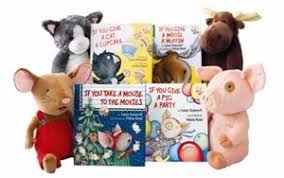
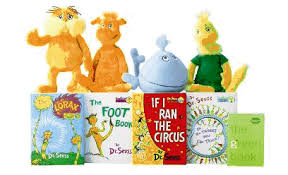
It's a card for $10 off anything you buy; something that's $10...is free. So maybe I'm just excited about buying $35 flats, on sale for $15, that I paid $5 with my biweekly card. But as I was there tonight I noticed that their Kohl's Cares for Kids stuff is now half what it used to be. Hard cover books, and a stuffed animal character from the book, is now only $2.50 each. I buy these books and the matching stuffed animal, stick 'em in a large Ziploc bag, and send them home as book bags. The kids love them! This month is the Skippyjon Jones books with a stuffed "Bumblebeeto". A few months ago were Eric Carle books. And now I can use my $10 card to get two hard cover books and two stuffed animals...for free! Thank you Kohls!
Sep 14, 2012
For A Spotless Classroom...
Do you ever look around after the kids leave for the day and your room still looks like a tornado hit it? Struggle to get the kids to clean the classroom...well? Back in the student teaching days I learned a heaven-sent game from my mentor teacher and ten years later I still use it as one of my go-to tricks. I love that it's worked on Kindergartners, fifth graders, and every grade in between (literally). It only takes two minutes and everything is spotless and organized by the end. Here's how you play:
Secret Item Game
1. Have the kids gather at the rug or their desks to start.
2. As they watch quietly, walk around the room and mentally choose one or two items that are out of place or need to be cleaned up. (The kids like to watch me for any clues about what items I'm looking at so I ham this up a bit when I get to areas of the room I really want cleaned)
3. Once you have secretly chosen 2 items, remind the kids of the only 2 rules: no talking/noise and no running.
4. When you say "go" the kids silently rush around the room trying to put away the item you may have chosen. Anyone who talks or runs is disqualified and sent back to the rug.
5. When your secret item has been cleaned up or taken care of, call the kids back to the rug to announce the winner. I have a special treat jar that I NEVER use except for special occasions - I let the winner pick a prize out of this jar.
*Tips*
- Don't use this game every day, or too often, or the charm will wear off
- Don't tell the kids the item has been found until the classroom is as clean as you want it
- Every so often choose a hard item, like a certain pencil needing to be sharpened or a certain book straightened on the shelf
- Call "no winner" if no one takes care of your item quickly or within your time frame...the kids will be more likely to get creative with their cleaning/organizing next time and start cleaning areas they normally overlook
And voila! Your classroom is clean, shelves are organized again, and your janitor is a happier man!

Secret Item Game
1. Have the kids gather at the rug or their desks to start.
2. As they watch quietly, walk around the room and mentally choose one or two items that are out of place or need to be cleaned up. (The kids like to watch me for any clues about what items I'm looking at so I ham this up a bit when I get to areas of the room I really want cleaned)
3. Once you have secretly chosen 2 items, remind the kids of the only 2 rules: no talking/noise and no running.
4. When you say "go" the kids silently rush around the room trying to put away the item you may have chosen. Anyone who talks or runs is disqualified and sent back to the rug.
5. When your secret item has been cleaned up or taken care of, call the kids back to the rug to announce the winner. I have a special treat jar that I NEVER use except for special occasions - I let the winner pick a prize out of this jar.
*Tips*
- Don't use this game every day, or too often, or the charm will wear off
- Don't tell the kids the item has been found until the classroom is as clean as you want it
- Every so often choose a hard item, like a certain pencil needing to be sharpened or a certain book straightened on the shelf
- Call "no winner" if no one takes care of your item quickly or within your time frame...the kids will be more likely to get creative with their cleaning/organizing next time and start cleaning areas they normally overlook
And voila! Your classroom is clean, shelves are organized again, and your janitor is a happier man!

Subscribe to:
Posts (Atom)